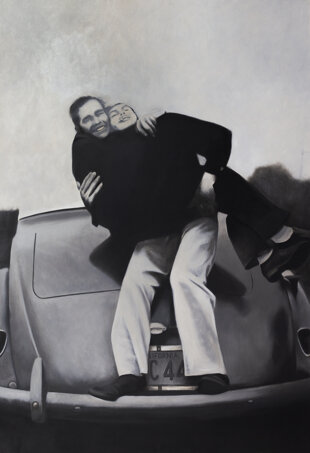
Cycloves
The “Cycloves” project was born as a reaction to a photography book entitled “Loving”, published in the United States in 2020.
This book is a collection of photographs of couples of homosexual lovers dating back to the first half of the 20th century, found in flea markets by the authors of the book, themselves a couple of homosexual spouses living in New York.
When I first came across this book I had already begun a long journey of searching for black and white portrait photos from the last century. In the shots collected and selected by the authors of the book Loving I found, together with the fascination for the purely aesthetic part of those images and the characters portrayed, a substrate of information that made that collection particularly significant and close to my "Family Lexicon" project (see my website).
My interest in the photographs that I researched and selected for my paintings arose from an interest that I would define as halfway between the nostalgic and the anthropological, that is, how in every single photograph the different layers of the cultural, social and intimate heritage of both the people portrayed and the society and historical context in which that shot/moment was frozen can resurface.
The photos of gay couples date back to a time when being homosexual in the United States was considered "forbidden" as it was illegal, and the punishment for violators included years in prison. The two authors of the book therefore realized that for each of those photographs to reach their hands, through a shop or an antiques market, they had to go through and survive many "steps" of illegality, from the two lovers who exposed themselves to the lens, to the photographer who agreed to portray them, and then to develop the negative and print it, to who then decided not to throw away the photo and perhaps keep it for many years in a family album etc.: so many steps that we forget today because carried out in the context of legality, they had then been accepted despite the risk of prison. As a corollary to these very pregnant images, the two authors also carried out a biographical investigation of some of the subjects portrayed, or of relatives and acquaintances who could add other information regarding the events of the two lovers portrayed.
When I started painting these images, I felt the need to unite the faces of the two lovers, I presume inspired by the intensity of their gazes which conveyed this urgency. The first attempt was very spontaneous, but in destroying the two faces to recompose a third I had to accept that this intervention would not guarantee me a result that was aesthetically better than the starting point. The starting point (the photo of the two lovers) is in itself "perfect", there is no point in trying to improve it. But I am interested in the possibility, offered by oil painting, to get to a result that I cannot foresee when I begin the superposition and union of the two lovers.
Cycloves
Il progetto “Cycloves” nasce come reazione ad un libro fotografico intitolato “Loving”, pubblicato negli Stati Uniti nel 2020.
Questo libro è una raccolta di fotografie di coppie di amanti omosessuali risalenti alla prima metà del ‘900, ritrovate in mercatini dell’usato dagli autori del libro, a loro volta una coppia di coniugi omosessuali residenti a New York.
Quando mi sono imbattuto per la prima volta in questo libro avevo già iniziato un lungo percorso di ricerca di foto di ritratti in bianco e nero del secolo scorso. Negli scatti collezionati e selezionati dagli autori del libro Loving ho ritrovato, insieme alla fascinazione per la parte puramente estetica di quelle immagini e dei personaggi ritratti, un substrato di informazioni che rendevano quella collezione particolarmente significativa e vicina al mio progetto “Lessico familiare” (vedi il mio sito).
Il mio interesse verso le fotografie che ricercavo e selezionavo per i miei dipinti scaturiva da un interesse che definirei a metà strada tra il nostalgico e l’antropologico, ovvero come in ogni singola fotografia possano riaffiorare i diversi strati del patrimonio culturale, sociale ed intimo tanto delle persone ritratte quanto della società e del contesto storico nei quali quello scatto/momento è stato congelato.
Le foto delle coppie gay risalgono ad un periodo in cui essere omosessuali negli Stati Uniti era considerato “proibito” in quanto illegale, e la pena per i trasgressori prevedeva anni di prigione. I due autori del libro si sono quindi accorti che affinché ognuna di quelle fotografie raggiungesse le loro mani, attraverso un negozio o un mercatino di antiquariato, aveva dovuto attraversare e sopravvivere tanti “passaggi” di illegalità, dai due amanti che si esponevano all’obiettivo, al fotografo che accettava di ritrarli, e poi di sviluppare il negativo e di stamparlo, a chi poi decideva di non buttare la foto e magari tenerla per tanti anni in un album di famiglia etc.: tanti passaggi che oggi dimentichiamo perché svolti nel contesto della legalità, allora erano stati accettati sfidando il rischio della prigione. A corollario di queste immagini così pregnanti, i due autori hanno anche svolto una indagine biografica di alcuni dei soggetti ritratti, o di parenti e conoscenti che potessero aggiungere altre informazioni riguardo le vicende dei due amanti ritratti.
Quando ho iniziato a dipingere queste immagini, ho sentito la necessità di unire i volti dei due amanti, presumo ispirato dall’intensità dei loro sguardi che trasmettevano questa urgenza. Il primo tentativo è stato molto spontaneo, ma nel distruggere i due visi per ricomporne un terzo ho dovuto accettare che questo intervento non mi avrebbe garantito un risultato esteticamente migliore del punto di partenza. Il punto di partenza (la foto dei due amanti) è in sé “perfetta”, non ha senso tentare di migliorarla. Ma mi interessa questa possibilità della pittura di farmi approdare ad un risultato che non posso prevedere quando inizio la sovrapposizione e l’unione dei due visi. Il percorso è interessante perché il risultato finale non è prevedibile, e molto probabilmente non sarà neppure esteticamente “bello”. Ma è un approccio che considero necessario per approdare a risultati non programmabili.
L’ obiettivo finale di questo progetto, che consiste nell’accettare l’imprevedibilità del risultato finale grazie alle caratteristiche che offre la tecnica della pittura ad olio, è in buona parte il risultato del tentativo di “ribaltare” l’iter tecnico di realizzazione di un’immagine che mi ero imposto per anni lavorando come illustratore free-lance di letteratura per ragazzi con la tecnica dell’acquerello, tecnica che consente pochi ripensamenti ed ancor meno correzioni.